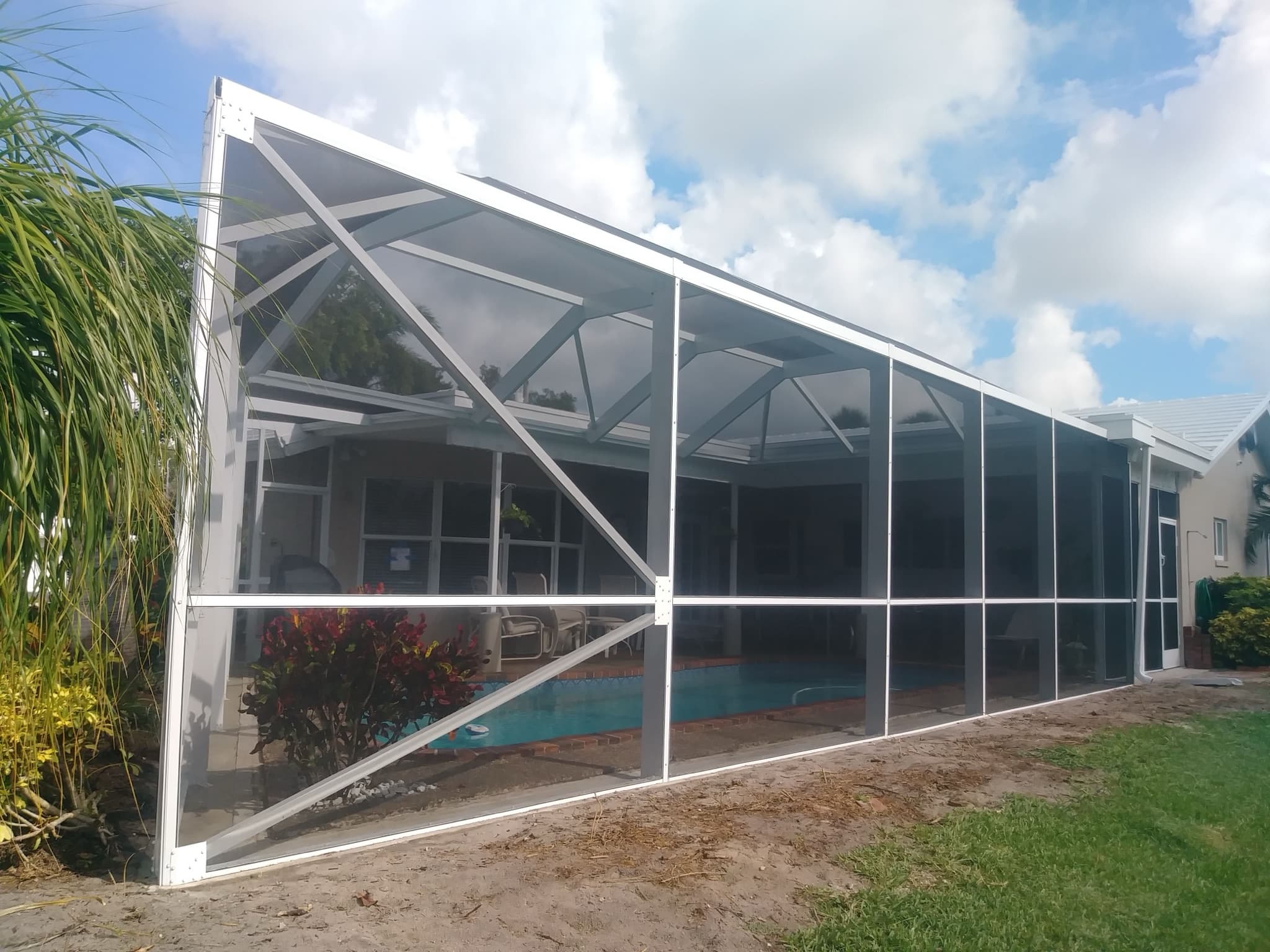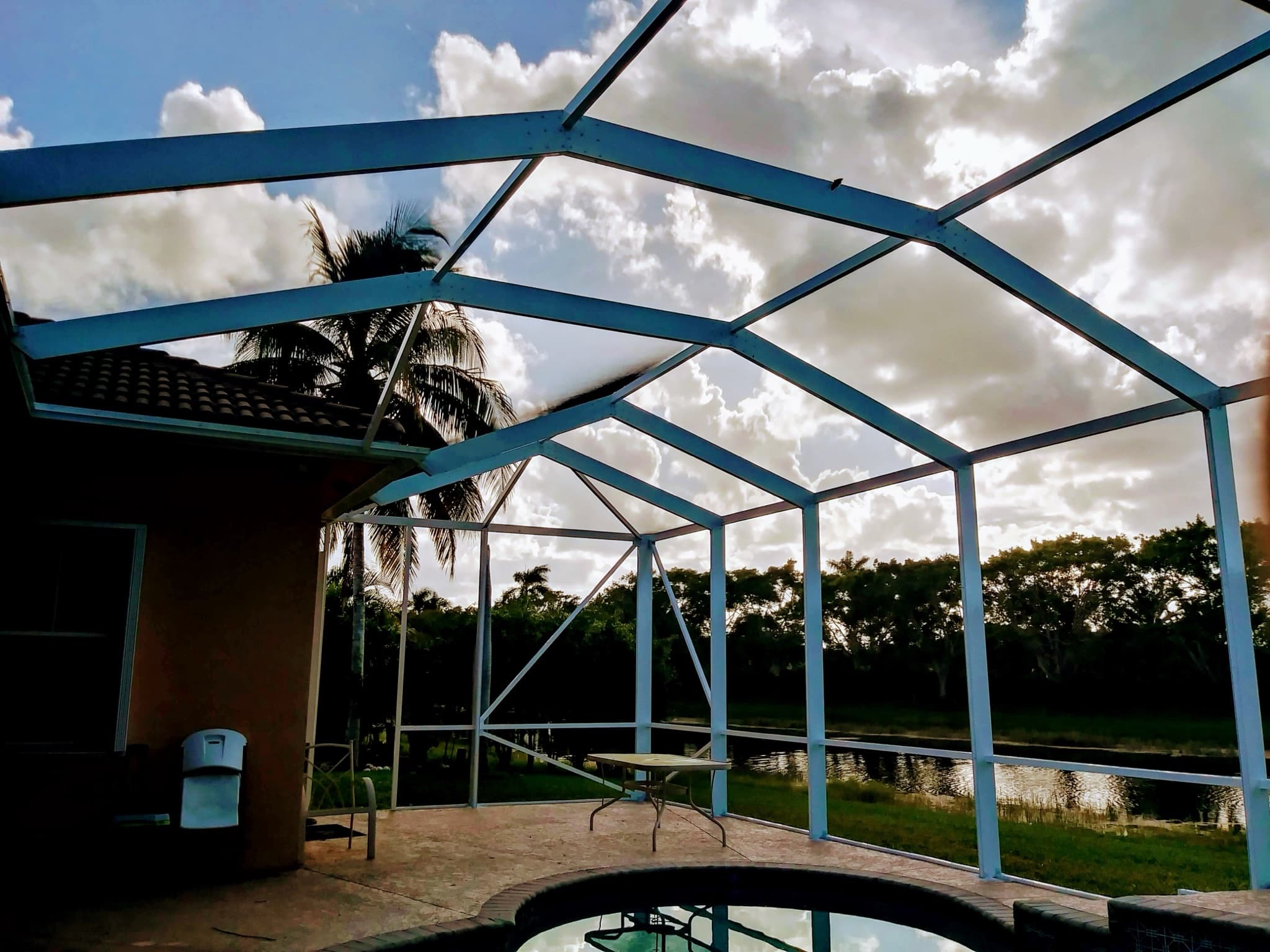
Hurricane-Rated Pool Enclosures - Maximum Protection for Coastal Properties
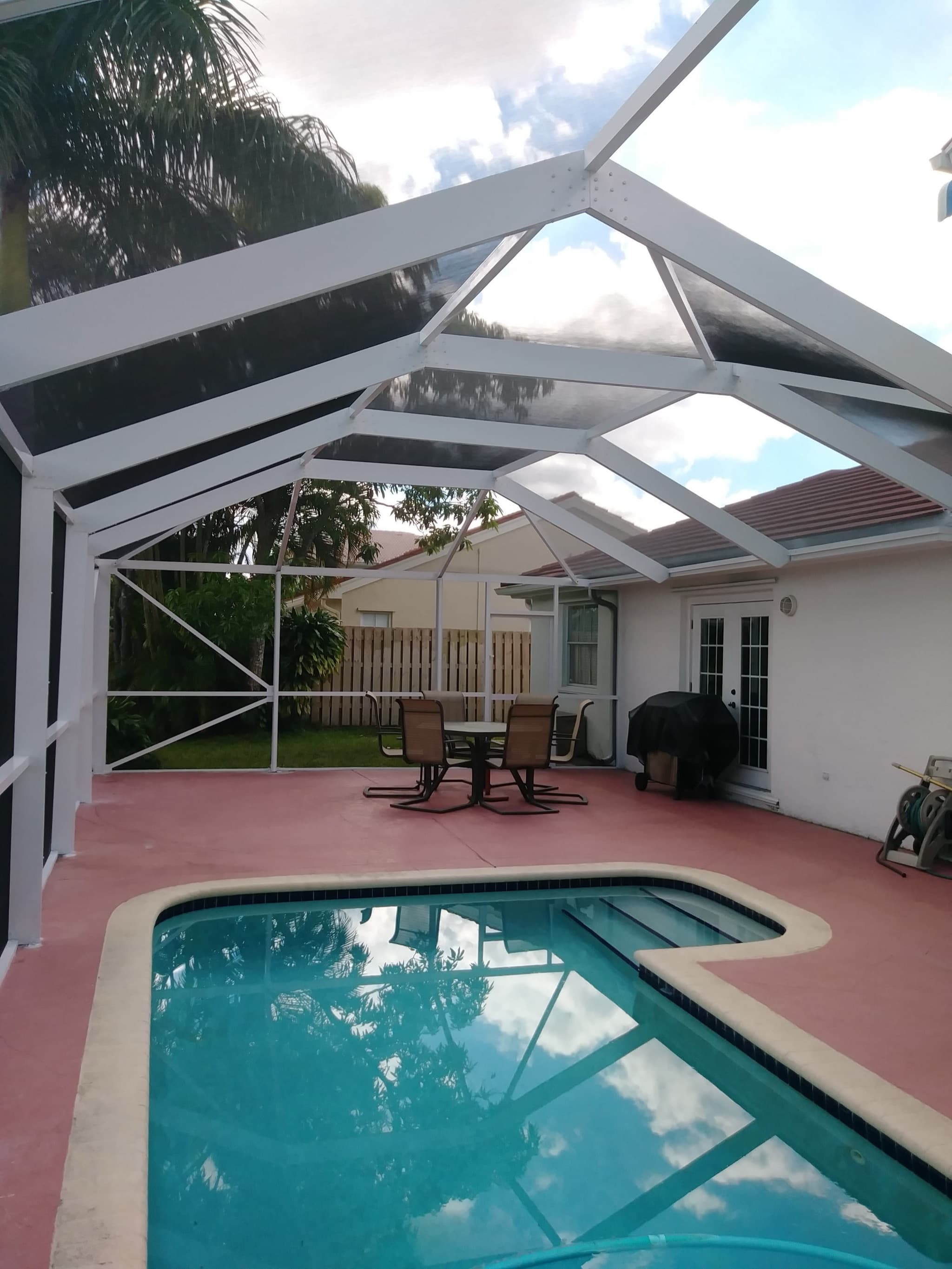
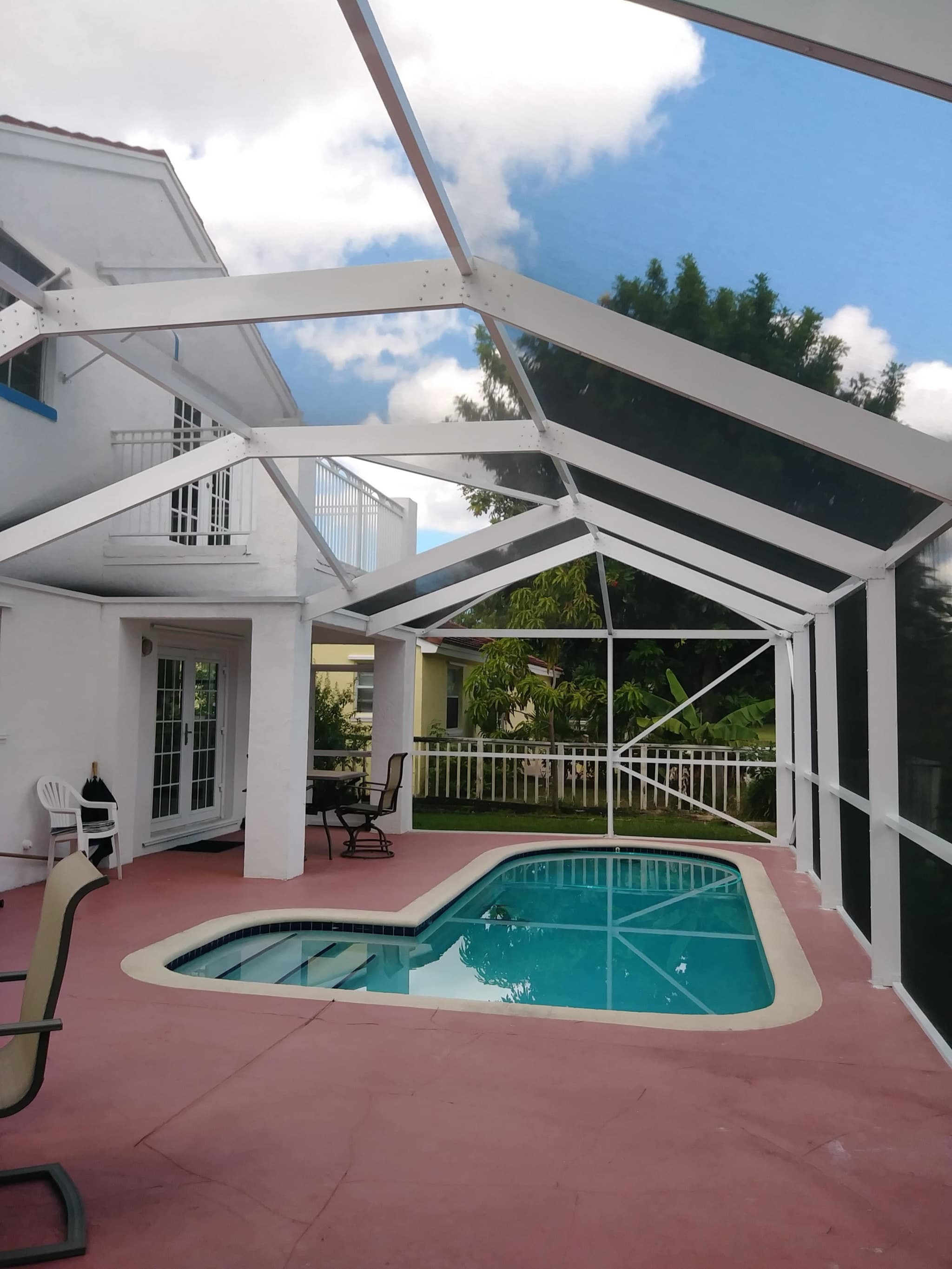
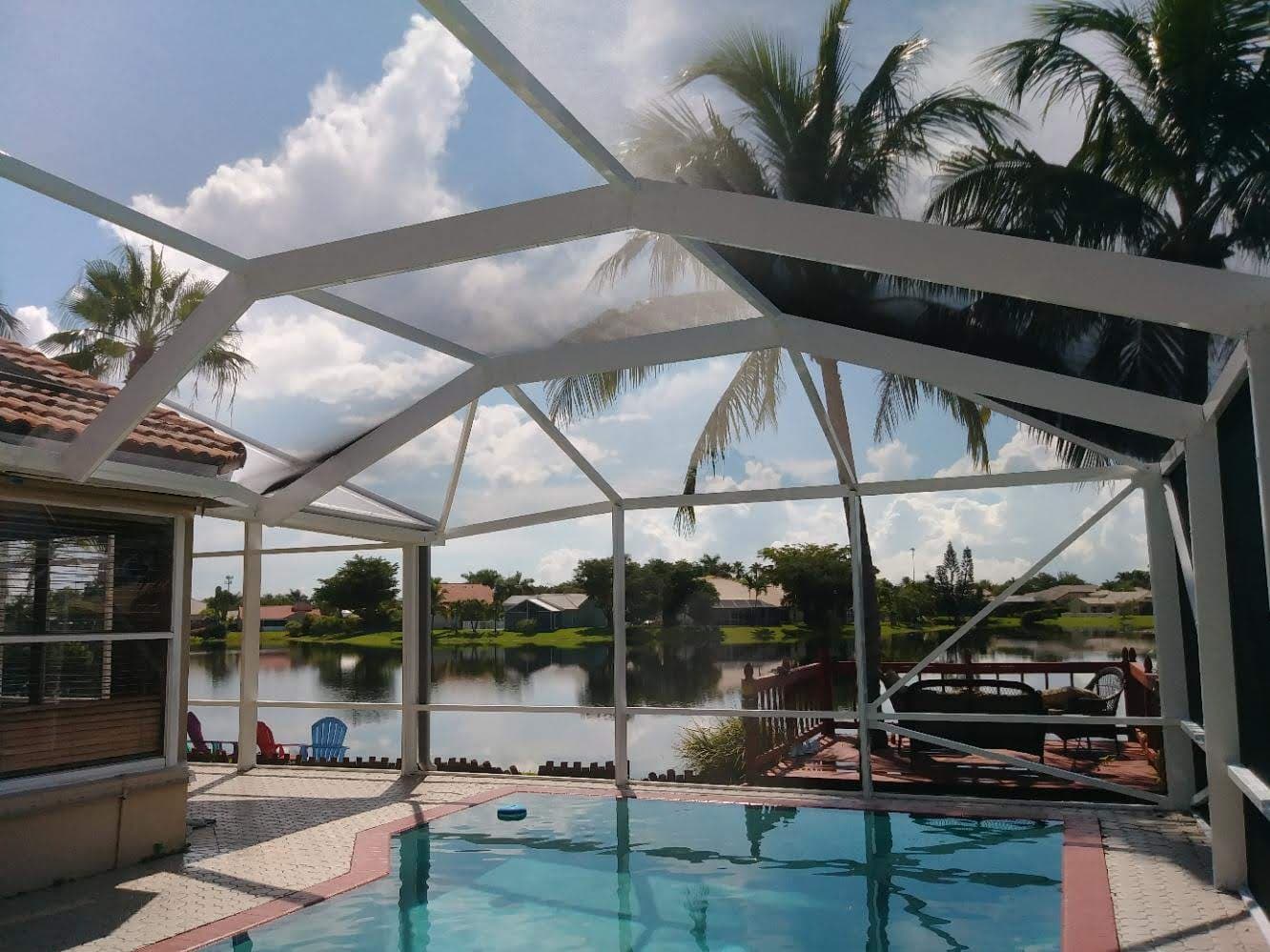
Hurricane-rated pool enclosures provide the highest level of wind protection available, specifically engineered for South Florida's most demanding coastal environments. Designed to withstand 140-150+ mph sustained winds with Miami-Dade County Notice of Acceptance (NOA) certification, these maximum-strength enclosures are required for properties in designated High Velocity Hurricane Zones and chosen by discerning homeowners throughout South Florida who prioritize superior protection.
Aces Up Screens has been installing hurricane-rated pool enclosures in Palm Beach County and northern Broward with over 30 years of experience. As a Florida-licensed contractor (CC# 20-AL-21822-X) with extensive HVHZ experience, we provide complete NOA-compliant engineering, permitting, installation, and warranty services ensuring your enclosure provides maximum protection when you need it most.
Understanding High Velocity Hurricane Zones
What is HVHZ Designation?
High Velocity Hurricane Zones are coastal areas designated by Florida Building Code as having the highest hurricane risk in the state. These areas require the most stringent building codes and engineering standards in the United States, ensuring structures can withstand the most powerful hurricanes.
Miami-Dade County HVHZ: Generally includes all areas within approximately 1 mile of the coast, covering most of Miami Beach, Key Biscayne, coastal Coral Gables, Coconut Grove waterfront areas, and other coastal communities. Exact boundaries are defined by Miami-Dade County building code maps.
Broward County HVHZ: Includes certain coastal areas in Fort Lauderdale, Hollywood, Pompano Beach, and other beachfront communities. HVHZ designation is more limited than Miami-Dade but follows similar wind load requirements.
HVHZ Requirements
Pool enclosures in HVHZ areas must meet significantly enhanced standards:
Wind Load Design: 140-150+ mph sustained wind speeds (vs 100-120 mph for non-HVHZ areas)
Miami-Dade NOA Certification: All components, assemblies, and installation methods must have current NOA approval
Enhanced Engineering: Complete structural engineering by Florida-licensed PE with detailed wind load analysis
Stricter Inspections: More frequent and detailed building department inspections throughout construction
Product Approvals: All materials and fasteners must appear on Miami-Dade approved product list
Verifying Your HVHZ Status
Not sure if your property is in an HVHZ? We verify this during your free consultation using:
- Miami-Dade or Broward County GIS mapping systems
- Your property's legal description and building department records
- Wind speed designation from your survey or existing plans
- Direct verification with your local building department
Many homeowners are surprised to learn their property is in an HVHZ - it's critical to verify before designing your enclosure.
Hurricane-Rated Engineering Differences
Enhanced Aluminum Framework
Hurricane-rated enclosures use significantly reinforced framework:
Larger Extrusion Profiles: .125" wall thickness aluminum extrusions (vs .080"-.100" standard) providing 25-50% greater structural strength
Greater Cross-Sectional Area: Wider and deeper profiles increasing load-bearing capacity and wind resistance
Additional Bracing: Diagonal bracing, knee braces, and intermediate horizontal members creating redundant load paths
Closer Post Spacing: Vertical support posts typically every 10-12 feet (vs 12-15 feet standard) reducing span loads
Hurricane-Rated Fasteners
Every connection uses approved hurricane-rated hardware:
Stainless Steel Screws: 304 or 316 grade stainless steel preventing corrosion while providing superior strength
Structural Bolts: Through-bolted connections at critical structural joints rather than screws alone
Concrete Anchors: Hot-dipped galvanized or stainless steel embedment anchors meeting Florida code requirements for pullout resistance
Specific Spacing Requirements: Engineering specifies exact fastener spacing (typically 6" on-center vs 8"-12" standard) ensuring adequate connection capacity
Foundation Attachments
Hurricane-rated enclosures require enhanced foundation connections:
Deep Embedment Anchors: Concrete anchors embedded 4"-6" into existing slabs or footings (vs 2"-3" standard)
Increased Quantity: More anchor points throughout the structure perimeter distributing wind loads
Load-Rated Attachments: All foundation connections engineered and tested for specific uplift and lateral load capacity
Structural Attachment Plates: Reinforced aluminum or steel plates at critical connection points distributing loads across larger areas
Miami-Dade NOA Certification Process
What NOA Approval Covers
Miami-Dade County Notice of Acceptance certification verifies:
Product Testing: Physical testing of components and assemblies in wind tunnel or laboratory conditions simulating hurricane-force winds
Engineering Documentation: Complete structural analysis and engineering calculations reviewed by third-party experts
Installation Standards: Approved installation procedures and quality control requirements documented and verified
Component Approval: All materials including aluminum extrusions, fasteners, screening, and hardware individually approved
System Performance: Complete assembled system demonstrated to meet performance requirements
Our NOA-Compliant Systems
As a licensed contractor with extensive HVHZ experience, we maintain current NOA approvals for multiple pool enclosure systems allowing us to design the optimal solution for your specific property requirements and budget. All installations include:
- Current NOA certificate copies for all components
- Engineering signed and sealed by Florida-licensed PE
- Installation procedures following NOA-approved methods
- Quality control documentation and inspection records
- Complete documentation package for building department and your records
Hurricane Performance Expectations
Structural Integrity
Hurricane-rated enclosures are engineered to maintain structural integrity during major hurricanes:
Framework Survival: Aluminum framing, posts, beams, and connections engineered to remain structurally intact and not collapse
Foundation Security: Attachments engineered to prevent structure from detaching or overturning in extreme winds
Load Path Continuity: All structural members and connections engineered to transfer wind loads safely to the foundation
Post-Storm Assessment: Structure remains safe and repairable rather than requiring complete replacement
Screening Expectations
Even in hurricane-rated enclosures, screening material serves as a pressure relief system:
Standard Screening: May tear or pull loose in extreme winds (120+ mph sustained) - this is by design, allowing wind to pass through
Impact-Resistant Screening: Better resistance to wind-borne debris and less likely to completely fail, but still may sustain damage in extreme winds
Replaceable Component: Screening is designed as a replaceable component, protecting the more expensive structural framework
Post-Storm Repairs: Screening replacement after major hurricanes costs $2,000-$6,000 typically - far less than complete structure replacement
Real-World Hurricane Performance
South Florida's hurricane history demonstrates proper engineering effectiveness:
Hurricane Andrew (1992): Properly-engineered pool enclosures showed remarkable framework survival with screening damage
Hurricane Wilma (2005): Similar pattern - engineered structures remained intact while screening required replacement
Hurricane Irma (2017): Most recent major test showed NOA-compliant enclosures performed as designed with framework surviving and screening serving as designed pressure relief
The consistent pattern: Investing in proper engineering protects your structural investment, with only the screening component requiring post-storm replacement in extreme events.
Pricing & Investment
Hurricane-rated pool enclosures represent a premium investment with pricing typically ranging from $12,000 to $22,000 for residential installations in South Florida HVHZ areas.
Cost Factors
Enhanced Engineering: Comprehensive structural analysis and NOA documentation adds $1,200-$2,000 over standard engineering
Reinforced Materials: Heavier aluminum extrusions, additional bracing, and hurricane-rated fasteners add 20-30% to material costs
Labor & Installation Time: More complex installation with precise fastener spacing and connection requirements adds 15-20% to labor costs
Permit & Inspection Fees: HVHZ areas typically have higher permit fees and require additional inspections
NOA Compliance Documentation: Maintaining proper documentation and quality control records adds administrative cost
Value Proposition
Despite higher upfront costs, hurricane-rated enclosures provide significant value:
Maximum Protection: Highest level of protection available for your investment and property
Insurance Benefits: Many insurance providers offer premium discounts for NOA-certified construction (verify with your insurer)
Property Value: Premium construction quality appeals to buyers in coastal areas, supporting higher property values
Long-Term Durability: Enhanced construction means longer lifespan and fewer repairs over time
Peace of Mind: Confidence that your enclosure was engineered to the highest standards provides invaluable security
Insurance Considerations
Check with your insurance provider about:
Premium Discounts: Some insurers offer 5-15% discounts for NOA-certified hurricane-rated construction
Deductible Reductions: Enhanced construction may qualify for lower hurricane deductible options
Coverage Requirements: Some coastal properties require hurricane-rated construction for insurability
Documentation Requirements: Keep all NOA certificates, engineering documents, and permits for insurance verification
Choosing Hurricane-Rated vs Standard
When Hurricane-Rated is Required
Hurricane-rated enclosures are mandatory for:
- Properties in designated HVHZ areas per local building codes
- Properties where building department specifies NOA certification
- New construction or major renovations in coastal Miami-Dade or Broward areas
When Hurricane-Rated is Recommended (but not required)
Consider upgrading to hurricane-rated even if not required if:
- Your property is within 2-3 miles of the coast (near HVHZ boundary)
- Your property has high value and you want maximum protection
- Your area has sustained hurricane damage historically
- You plan long-term ownership (15+ years)
- Your insurance provider offers meaningful discounts
- Peace of mind and maximum protection are priorities
When Standard May Be Adequate
Standard enclosures meeting local building codes provide good protection for:
- Properties well inland (5+ miles from coast) with lower wind requirements
- Properties in areas with minimal hurricane history
- Budget-focused projects where cost is primary concern
- Properties with limited exposure (surrounded by other structures providing wind protection)
We provide honest recommendations based on your specific location, risk tolerance, and budget during your free consultation.
Ready to protect your property with a hurricane-rated pool enclosure? Contact Aces Up Screens today at (954) 548-1934 for a free consultation and detailed estimate. Our licensed team specializes in HVHZ installations throughout Palm Beach County and northern Broward.